Intro

Contents
About Namdong-Gu
History
SINCE 1757~
- Now ~ 1991
-
- November 5, 2018Separated Jangsuseochang-dong and Seochang 2-dong (20-dong)
- May 20, 2011Separated Nonhyeon 1- and 2-dong and Nonhyeongojan-dong (19-dong)
- July 20, 2009Newly installed Nonhyeon-dong (18-dong)
- November 1, 1998Merged 6 dongs to 3 dongs (17-dong)
- January 1, 1995Changed name to Incheon Metropolitan City (Law No. 4789)
- January 22, 1994Held the opening ceremony of Namdong-gu Office
- December 27, 1993Completed construction of Namdong-gu Office
- December 1, 1993Newly installed Guwol 4-dong and Mansu 6-dong (20-dong)
- January 1, 1992Newly installed Namdong Industrial Complex Branch
- August 26, 1991Newly installed Guwol 3-dong, Mansu 5-dong, Namchon-dong (18-dong)
- 1980 ~ 1990
-
- January 1, 1990 Newly installed Ganseok 4-dong (15-dong)
- January 1, 1981 Promoted to a direct-controlled municipality
- July 1, 1981 Opened Namdong Branch Office of Nam-gu in Incheon Metropolitan City
- January 1, 1988 Newly installed Namdong-gu of Incheon Metropolitan City (13-dong) (Presidential Decree No. 12367)
- May 5, 1988 Promoted to an autonomous district (Revised Local Government Act No. 4004)
- December 31, 1988 Partially adjusted administrative districts (Guwol 1-dong, Ganseok 1-dong) (Presidential Decree No. 12557)
- January 1, 1989 Newly installed Namdong-gu Community Health Center pursuant to office reorganization (3 offices)
- May 15, 1989 Newly installed Mansu 4-dong (14-dong)
- 1900 ~ 1979
-
- January 1, 1968 Incorporated to Nam-gu, Incheon-si (proclaimed the law for district installation in Incheon-si)
- August 15, 1948 Installed Namdong Branch Office of Incheon-si (announcement of the Local Government Act)
- August 15, 1945 Renamed from Incheon-bu to Incheon-si according to local government implementation
- April 1, 1940 Incorporated to Incheon-bu
- March 1, 1914 Namdong-myeon, Bucheon-gun
- ~ 1757
-
- 1757 Restored to Incheon Dohobu (33rd year of King Yeongjo)
- 1748 Degraded to Incheon-hyeon (24th year of King Yeongjo)
- 1460 Promoted to Incheon Dohobu ( 6th year of King Sejo)
- 1413 Reorganized into Incheon-gun (13th year of King Taejong)
- 1392 Reorganization from Gyeongwon-bu to Inju (the first year of King Taejo of Joseon)
Logo
- It expresses implementation of the trusted autonomous government that represents the rapid development and growth of the district and the will of Namdong-gu to live up to the creation of a well-off and better society.

- Rounded outline
- Symbolizes the harmony and united power of the residents
- Five lines
- A soaring barn swallow, the representative bird of the district
- Sphere color
- Sky blue which is a comprehensive and symbolic color that expresses clear and clean environment
Symbols of Namdong-gu
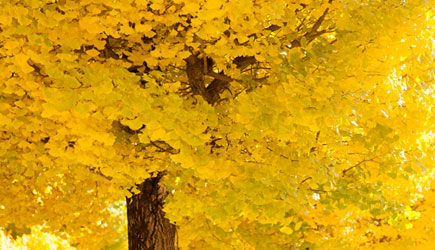
Wood: Ginkgo biloba
- The 800-year-old Ginkgo biloba located in Jangsu-dong symbolizes the district as it represents upright spirit and cleanliness.
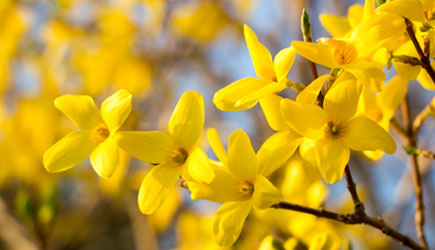
Flower: Forsythia Koreana
- Forsythia Koreana grows naturally in Namdong-gu. As a species that first signifies the advent of spring, it stands for the pioneering spirit of novelty creation.
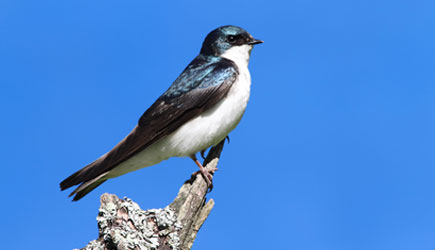
Structure : Barn Swallow
- The barn swallow, which flies at a speed of 90km an hour, is a propitious bird that signals the arrival of spring. As the representative bird of the district, it expresses rapid development of Namdong-gu.
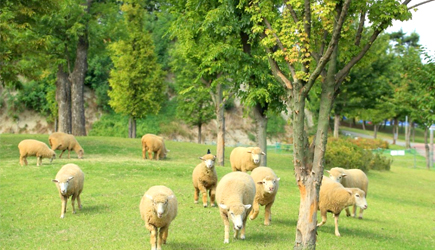
Animal: Sheep
- The gentle and kind sheep that live in a group symbolizesNamdong-gu, aiming to bea nature-friendly, green and environment-friendly city.
Local characteristics
- Urban-rural complex, high-tech industrial complex converged city
- The center of administration, education, culture, economy, and transportation
- An eco-friendly residential city with heaven-blessed nature
- A multicultural city where diversity coexists
General information
Extent
57.0km² [5.4% of Incheon]
Green belt (28.5km², 50%), housing (16.1km², 28.3%), industry (10.3km², 18.1%), commerce (2.0km², 3.5%), other (0.1km², 0.1%)
- 50%Green belt(28.5㎢)
- 28.3%housing(16.1㎢)
- 18.1%industry(10.3㎢)
- 3.5%commerce(2.0㎢)
- 0.1%other(0.1㎢)
Population
- Population : 515,192 people (257,620 men; 257,572 women)
257,620
Men257,572
Women
- Registered residents: 503,689 people from 226,328 households (250,249 men; 253,440 women)
- Registered foreigners: 11,503 people (7,371 men; 4,132 women)
Administrative organization
- Administrative area: 3,784-ban, 886-tong, 20-dong
- Organization: 6 bureaus, 2 offices, 35 divisions, 1 executive office, 1 direct institution, 1 branch offices, 20-dong
- Official: 1,335 people
Welfare
- Recipients of National Basic Livelihood Security: 33,692 people from 23,488 households
- Beneficiary of medical aid: 20,879 people from 14,877 households
- Persons with disability (registered): 26,785 people
- Beneficiary of basic pension: 59,118 people
- North Korean defector: 1,883 people
- Koreans that returned from Sakhalin: 386 people
- Immigrant by multicultural marriage: 2,041 people
Infrastructure
- Open road: 484.4km
- Sewerage line : 964km
- Rivers: 6 locations (4 class II local rivers, 2 small rivers)
- Park: 171 parks (7.48km²)
- 154 constructed parks for 6.96 km² / 17 unconstructed parks for 0.52 km²
- Green belt: 212 areas (0.81 km²)
- 206 constructed areas for 0.80 km² / 6 unconstructed areas for 0.01 km²
- Housing: 203,428 households (excluding other households)
- Apartment: 128,576 households / House: 3,675 households / Townhouse: 3,524 households / Multi-household abode: 21,660 households / Multiplex house: 46,045 households
Major facilities
- Related authority: 29 institutions
- Disaster preparedness facility: 19 places [5 drainage pumping stations,7 detention basins,7 sluices]
- Cultural property: 9 places
- Public sports facility: 77 places
- 10 sports squares, 18 parks, 10 indoor facilities, 2 national archery centers, 37 villages
- Cultural infrastructure: 84 places
- 1 culture and arts center, 1 Sorae Art Hall, 1 history museum, 2 museums (private), and 1 cultural center
- 2 municipal libraries,5 district libraries, 71 small libraries (7 public libraries, and 64 private libraries)
- Social welfare facilities: 935 places
- 567 elderly welfare facilities, 25 welfare facilities for the disabled, 1 multicultural facility, and 1 North Korean defectors’ center
- 11 social welfare related facilities (4 general social welfare centers, 1 volunteer center, 1 NamdongCommunity Self-sufficiencyCenter, 4 food bank and markets, and1 veterans hall)
- 248 childcare facilities (47 public, 96 private, 93 family daycare centers, 2 social welfare corporations, 1 corporation/organization, 9 workplace childcare centers)
- 15 shared childcare facilities (3 joint parenting facilities, 12 Incheon Support Center for Childcare)
- 67 family welfare related facilities for women, children, youth, etc.
- Social economy: 207 places (68 social enterprises, 8 community enterprises, 132 cooperatives)
- Educational institutions: 142 places
- 61 kindergartens, 39 elementary schools, 22 middle schools, 16 high schools, 2 special-education schools, and 2 other institutions
- Factory: 8,661 companies (8,148 factories in Namdong Industrial Complex, 513 factories in general area)
- Distribution facilities : 14,320 places
- 1,539 tobacco and retailers, 12,606mail orders, 125 door-to-door sales, and 50 telemarketing
- Markets and large-scale stores: 18 places (8 traditional markets, 10 large-scale stores)
- Agriculture andfisheries industry
- 1,713 agriculture households (655ha) ※ As of March 2023, 15 livestock households (3,790 animals) and 158 fishing boats
- Medical and pharmaceutical business: 2,506 businesses (759 medical institutions, 1,747 pharmaceutical sales)
- Sanitary business: 13,983 businesses in total
- 11,616food sanitation businesses, 2,367public health and sanitary products businesses
Revenue and expenditure budget
A total amount of KRW 1185.0 billion
-
- General accounting
- KRW 1072.4 billion (95.87%)
-
- Special accounting
- KRW 16.4 billion (1.47%)
-
- Funds
- KRW 29.7 billion (2.66%)
※ Financial independence: 19.57% / Financial autonomy rate : 31.21%
-
- Representative number
- (032) 466-3811 ~ 20
-
- Duty room
- (032) 453-2222
-
- FAX
- (032) 464-6275
- Address
- 633, Sorae-ro, Namdong-gu, Incheon Metropolitan City (Mansu-dong)
Culture and Sightseeing
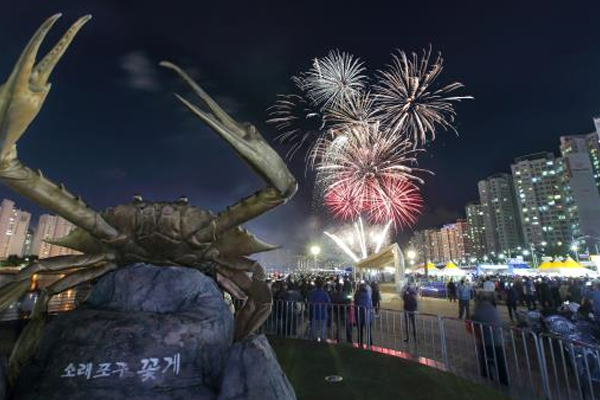
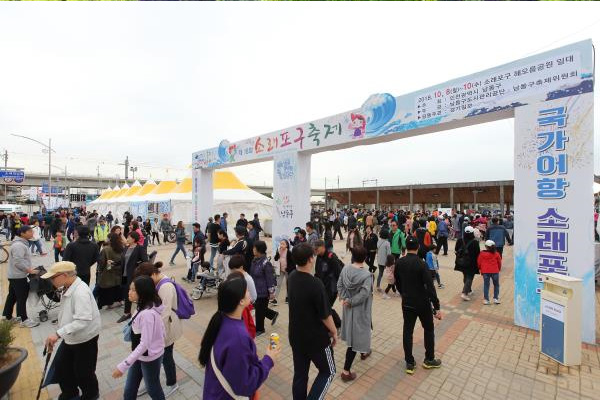
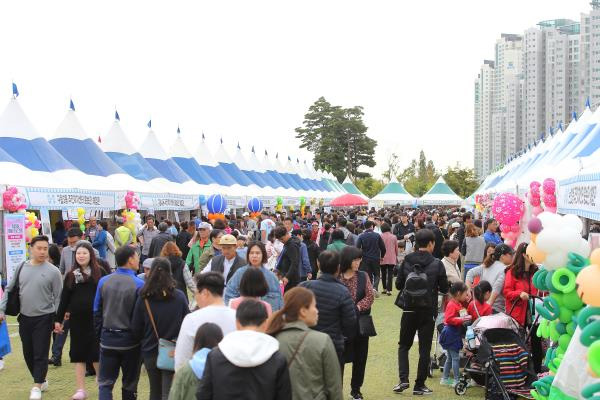
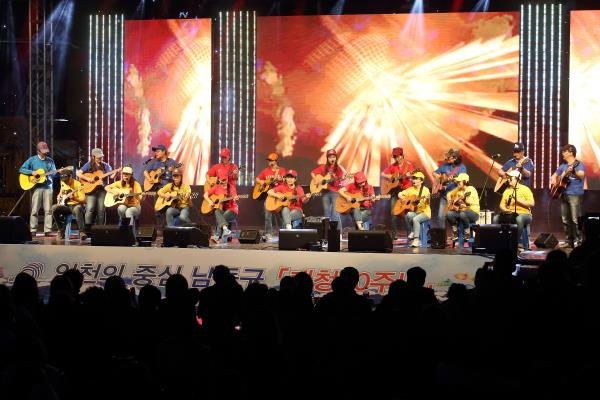
Incheon Soraepogu Festival
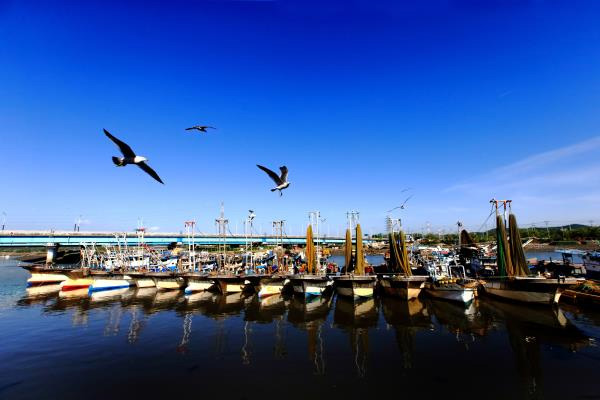
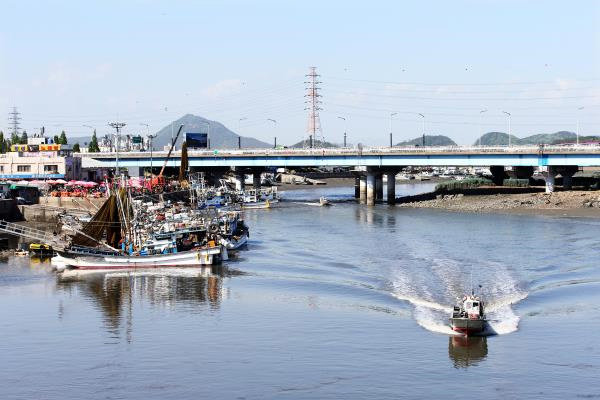
A mysterious natural port, the only traditional fishing port in the metropolitan area
Incheon Soraepogu Festival is one of the representative cultural tourism festivals created for tourists visiting Soraepogu. Soraepogu is a sightseeing spot surrounded by heaven-blessed nature of the metropolitan area, where small boats and sunset create a magnificent view.
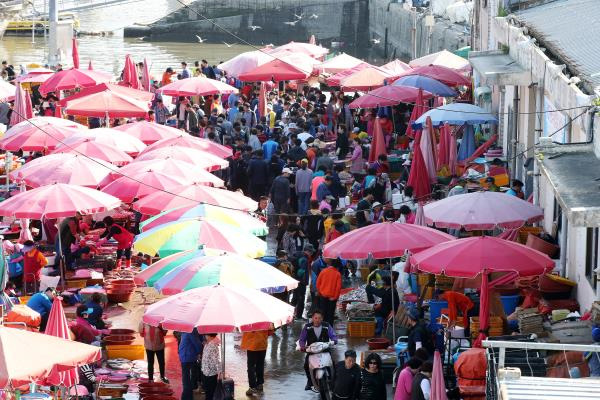
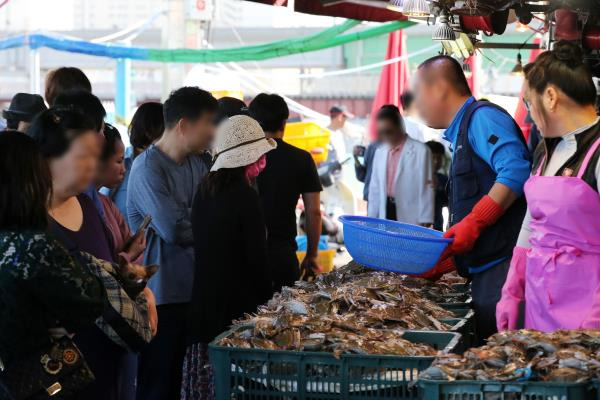
Soraepogu is one of the most popular tourist attractions in the Seoul metropolitan area visited by seven million tourists a year. In this place, people can experience and taste various fresh seafood including shrimps, crabs, and salted fish. The Sorae Marsh Ecological Park, which is known for solar salt, is located near Soraepogu. The salt field in the park is preserved so it is considered as a repository with well-preserved marine ecosystem.
- Location: Entire area of Haoreum Park in Nonhyeon-dong, Namdong-gu, Incheon
- Period: The whole month of October
Characters
 Saerang-i
 Gerang-i
The characters of Namdong-gu are<Saerang-i> and <Gerang-i> whichrepresenta ‘shrimp’ and ‘blue crab’, respectively, ofSoraepogu Port. Being enchanted by the charm of Namdong-gu, these "fairy" friends, wearing ‘shrimp’ and ‘blue crab’ masks willdeliver happiness to the people in Namdong-gu, traveling in every corner of Namdong-gu, such as the sea and nature. In addition, the 'fairy' friends will always be with the residents in a fun and friendly way, communicating with people of all ages.
Soraepogu
Full of memories and romance
Soraepogu is more accessible with the opening of the subway’s Suin Line. As the sole natural fishing port in the metropolitan area, Soraepogu always represents romance and memories through time. Enjoy fresh seafood and a variety of salted fish at Incheon Soraepogu Festival that is held every month of October.
- Location: Entire area of 2-9, Pogu-ro, Namdong-gu, Incheon Metropolitan City
Sorae History Museum
History of the living
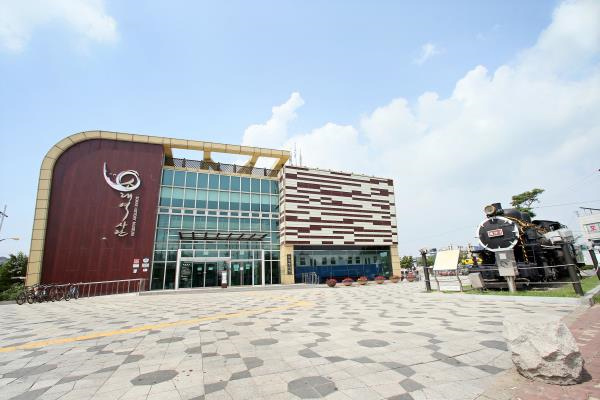
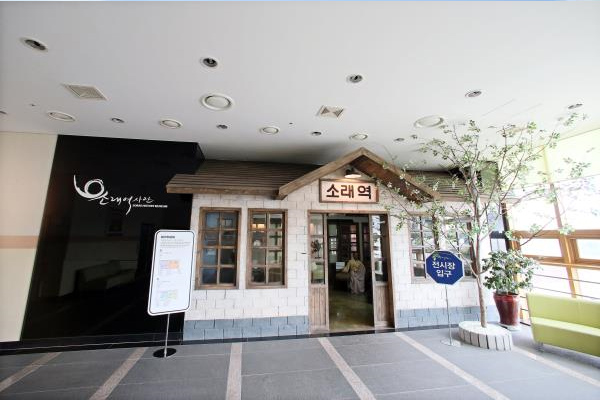
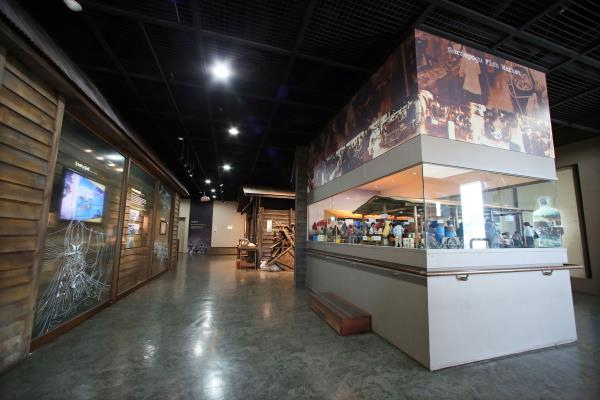
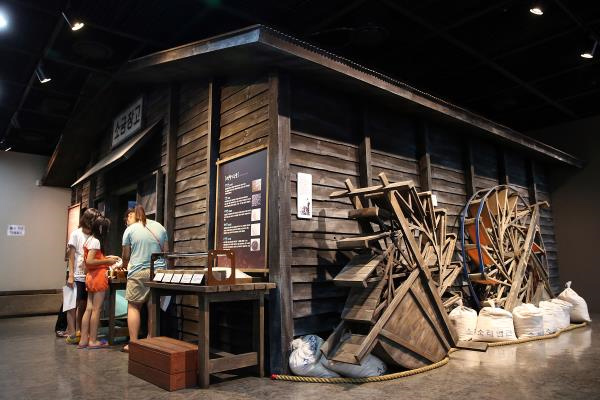
The Sorae History Museum contains the history and culture of Sorae, which is being forgotten due to urbanization and rapid development of new cities. It vividly shows the history of the people living in Sorae.
- Location: 1605, Aam-daero , Namdong-gu, Incheon Metropolitan City
Sorae Marsh Ecological Park
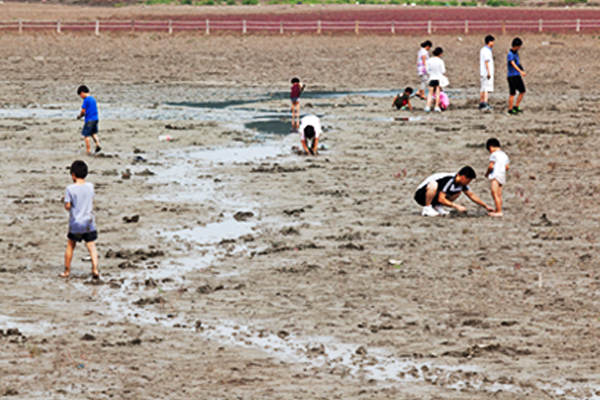
Mudflat experience
in the city center at Sorae Marsh
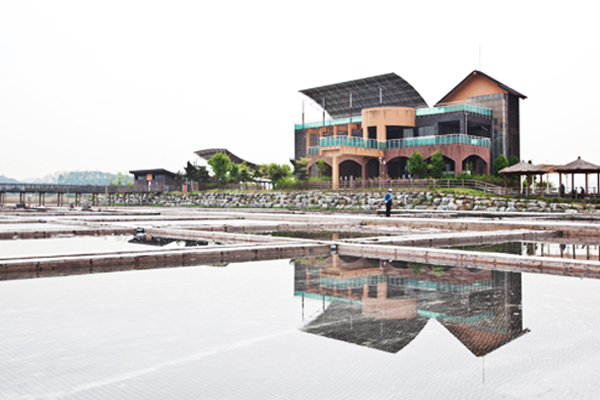
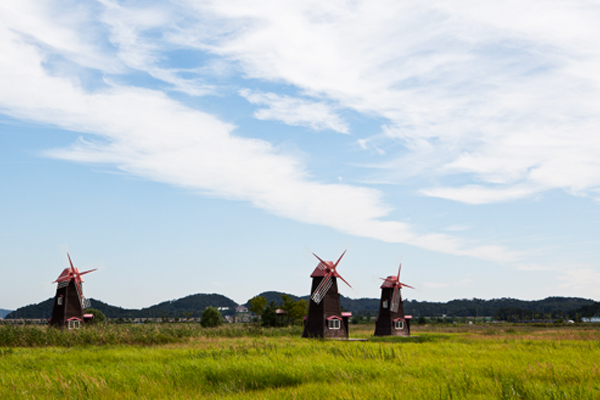
At the Sorae Marsh Ecological Park, you can fully experience being in a wetland in the middle of the city. Since it is located at the old Sorae salt field, various salt plants such as Suaeda glauca (Bunge) Bunge, Suaeda japonica, Salicornia europaea, etc. are widely distributed. Also, the open walking trail with reeds and windmill creates magnificent view.
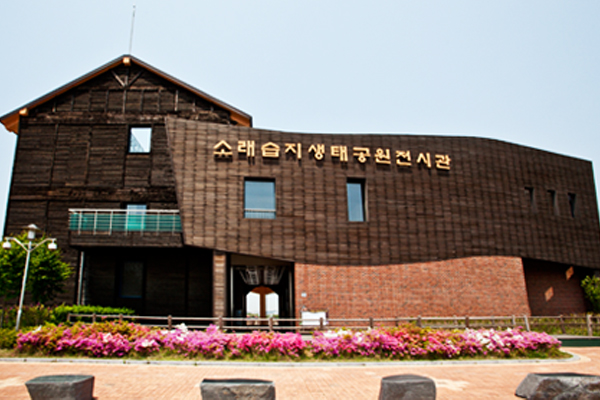
Visitors can experience and observe the ecology and marine culture of the 8,000 year-old natural mudflat at the ecological exhibition hall and nature learning center. These were made by renovating the salt warehouse. Salt production and mudflat experience are also available here.
- Location: 77, 154-beongil, Sorae-ro, Namdong-gu, Incheon Metropolitan City
Incheon Grand Park
Good for walking all year round
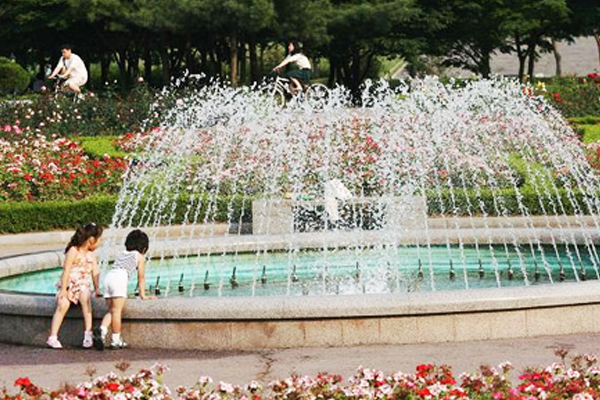
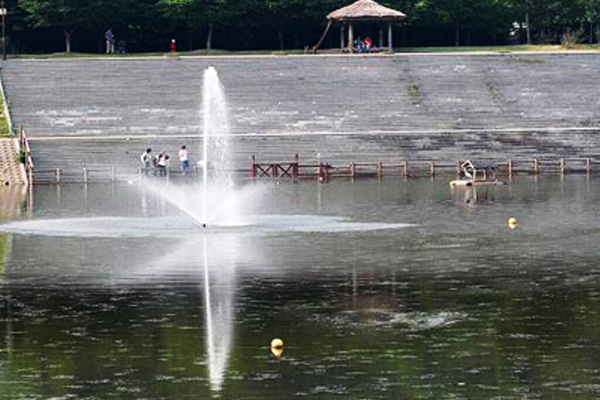
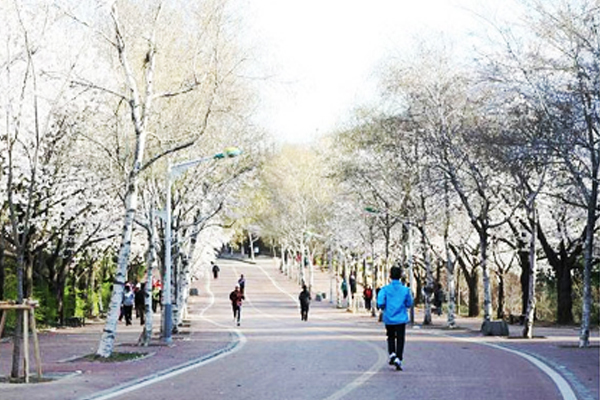
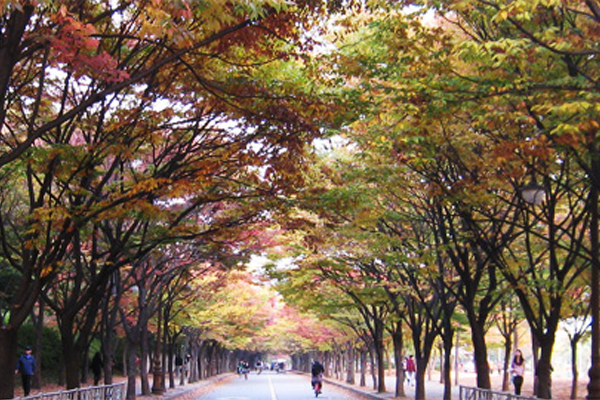
Incheon Grand Park is a large natural green park surrounded by Mt. Gwanmosan and Mt. Sangsan.
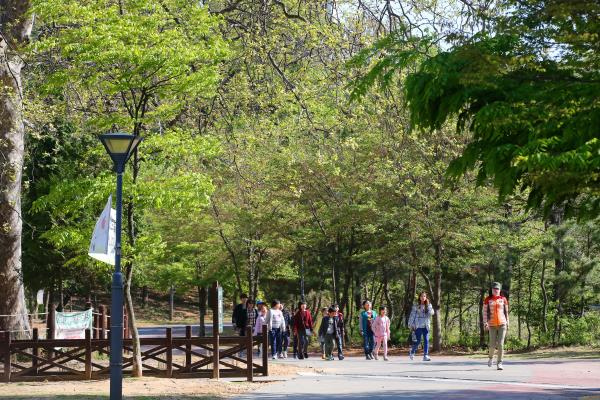
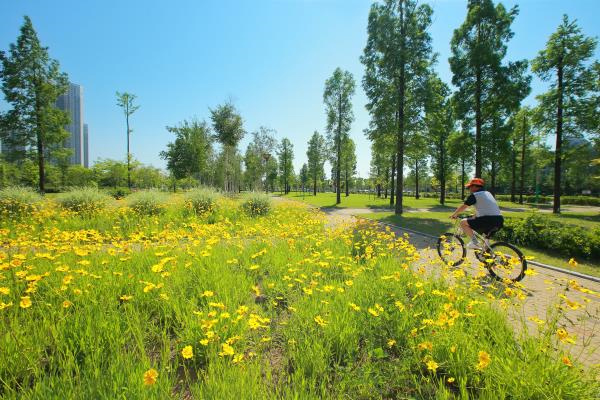
It is a forest within a city which is full of cherry blossoms in spring, roses in early summer, and colorful fallen leaves in autumn. There are various convenient facilities such as children’s zoo, forest library, four-seasons sledding, bicycle tour, etc.
- Location: 236, Munemi-ro, Namdong-gu, Incheon Metropolitan City
Neulsolgil Park
From cypress forests to sheep ranch
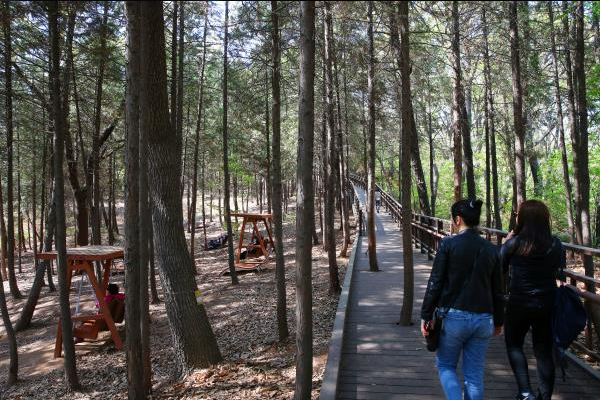
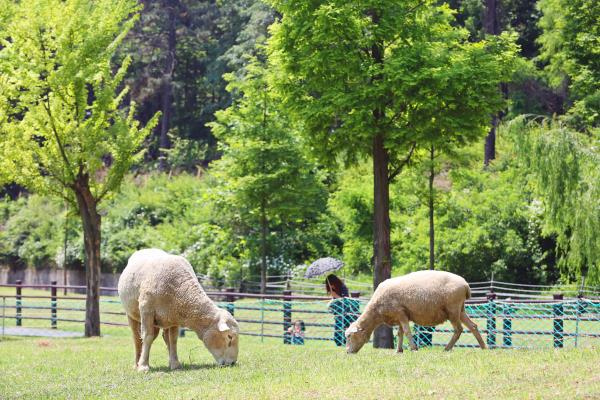
Neulsolgil Park is one of the representative tourist attractions in Namdong-gu. A variety of things may be seen and enjoyed at this park including the barrier-free trail that features a forest bath, sheep ranch with cute sheep, forest playground, and the Hanwha Historical Museum where the history and development of gunpowder can be seen in one view.
- Location: 738-8, Nonhyeon-dong, Namdong-gu, Incheon Metropolitan City
Namdong Industrial Complex
Location
- 40km from Seoul, southwest of Incheon. Entire area of Nonhyeon-dong, Namchon-dong, and Gojan-dong in Namdong-gu, Incheon Metropolitan City
Purpose of establishment:
- To provide a place for relocation of small and medium-sized enterprises to the metropolitan area
- To contribute to the maintenance and industrial relocation in the metropolitan area
Basic management direction
- Encourage structural advancement of business types by upgrading the structure of the industrial complex.
- Create innovations and reinforce competitiveness of the tenant businesses through construction of innovation cluster.
- Create a pleasant environment by attracting environment-friendly industrial facilities.
- Focus on factory automation and employee welfare support to improve productivity.
- Promote industrial development through rational factory layout and efficient use management.
- Expand information infrastructure and industrial integrated infrastructure in the complex.
History
- July 2, 1980 Confirmed the creation plan by the Standing Committee of the Special Committee for National Security Measures
- July 11, 1984 Notified the Seoul metropolitan area of readjustment in the plan (Namdong Complex → designated as development area)
- February 9, 1985 Approved the construction and execution plan in accordance with Article 24 of the Urban Planning Act (Ministry of Construction)
- April 20, 1985 Started Stage 1 construction
- December 29, 1989 Completed the Stage 1 construction of Namdong Industrial Complex (Notification of Incheon-si No. 294)
- June 30, 1992 Completed the Stage 2 construction of Namdong Industrial Complex
- February 28, 1997 Completed the Stage 3 construction of Namdong Industrial Complex
- June 24, 2009 Changed the basic management plan of Namdong Industrial Complex (Notification of the Ministry of Knowledge Economy No. 2009-124)
- December 2009 Designated as a model complex for structural advancement (The Ministry of Knowledge Economy )
- November 4, 2010 Approved the structure advancement plan for Namdong Industrial Complex (Stage 1)
Scale of the complex
(Unit: 3,305.8m2 (thousand pyeong in Korean))
| Total area | Industrial facility | Support facility | Public facility | Green zone |
|---|---|---|---|---|
| 9,574(2,896) | 5,913(1,788) | 277(84) | 2,991(905) | 393(119) |
Status of occupancy
(Unit: company, (%))
| Classification | Business | Construction: preparing, temporarily closed, closed down |
Note (lease) |
||||||
|---|---|---|---|---|---|---|---|---|---|
| Subtotal | Machinery | Electronics | Petrochemistry | Wood Paper | Transportation equipment |
Other | |||
| 6,906 (100) |
6,715 (97.2) |
3,604 (52.2) |
1,153 (16.7) |
768 (11.1) |
270 (3.9) |
236 (3.4) |
684 (9.9) |
191 (2.8) |
4,710 (68.2) |
- Tenants (6,681): 11 businesses with more than 300 employees; 272 with 50-300 employees; 6,398 with less than 50 employees
Status summary
- A total of 6,906 tenant businesses in the Namdong Industrial Complex as of January 2019
* There are 4,710 renters, accounting for 68.2% of all tenant companies. - Production as of January 2019 was KRW 2.5463 trillion (6.3% increase compared to the previous month, 16.5% increase compared to the same month last year)
- Export as of January 2019 was USD 425 million (1.8% increase compared to the previous month, 37.4% increase compared to the same month last year).
- Employment as of January 2019 was 102,191 people (0.3% decrease compared to the previous month, 2.8% decrease compared to the same month last year).